

Giza Pyramids and Grand Egyptian Museum Tour Overview
Discover two of Egypt’s most important attractions in one unforgettable day on a private Pyramides de Gizeh and Grand Egyptian Museum tour from Cairo.
Travel in comfort with a professional Egyptologist and a private air-conditioned vehicle as you explore the legendary Giza Plateau, stand beneath the Great Pyramid of Khufu, see the Great Sphinx and continue to the Grand Egyptian Museum.
This full-day experience combines ancient monuments, royal history and world-famous museum collections in one carefully planned itinerary.
Your private guide will help you understand the history of the pyramids, the kings who built them and the archaeological objects displayed inside the Grand Egyptian Museum.
Duration: Full day
Tour Type: Private tour
Pickup: Cairo or Giza hotel
Guide: Professional Egyptologist
Main Attractions: Giza Pyramids, Great Sphinx, Valley Temple and Grand Egyptian Museum

Tour Highlights
- Visit the three main pyramids on the Giza Plateau.
- Stand beside the Great Pyramid of Khufu.
- See the pyramids of Khafre and Menkaure.
- Stop at a panoramic viewpoint overlooking the pyramid complex.
- Visit the Great Sphinx and Valley Temple.
- Explore the Grand Egyptian Museum with a professional Egyptologist.
- See the monumental displays inside the Grand Hall.
- Walk along the Grand Stairs.
- Explore selected Main Galleries.
- Visit the Tutankhamun Galleries.
- Discover the story of King Khufu’s ancient boats.
- Enjoy a traditional Egyptian lunch.
- Travel in a private air-conditioned vehicle.
- Receive private pickup and return service from your Cairo or Giza hotel.
Detailed Giza Pyramids and Grand Egyptian Museum Tour Itinerary
Hotel Pickup from Cairo or Giza
Your private Egyptologist guide will meet you at your hotel in Cairo or Giza.
After meeting your guide, begin your journey toward the Giza Plateau in a private deluxe air-conditioned vehicle.
Your exact pickup time will be confirmed before the tour.
The schedule may be adjusted according to your hotel location, traffic conditions, seasonal weather and the available admission time at the Grand Egyptian Museum.
Visit the Giza Pyramids Complex
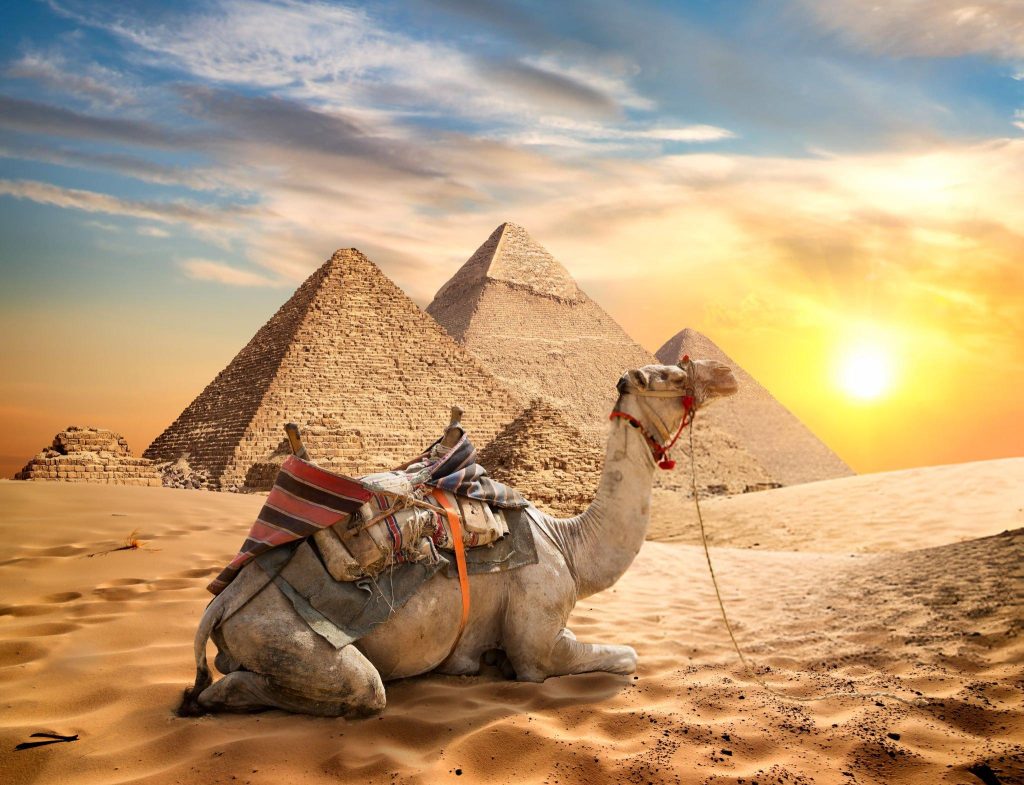
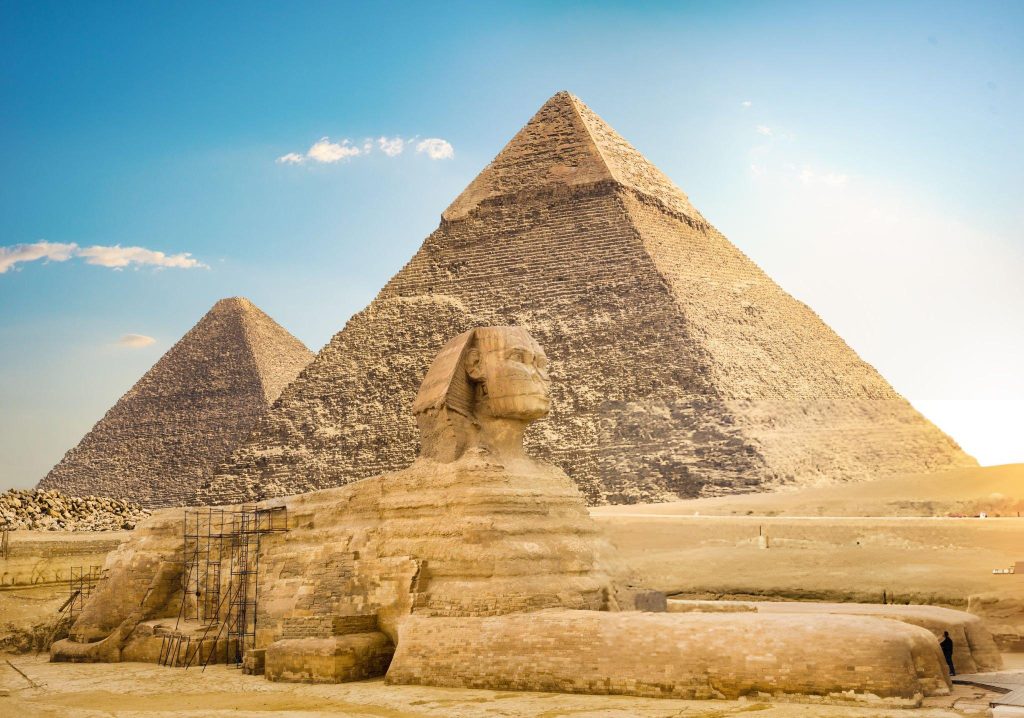
Your first major stop is the Giza Plateau, home to the pyramids of Khufu, Khafre and Menkaure.
This extraordinary archaeological site includes pyramids, temples, tombs, causeways and monuments connected with Egypt’s ancient royal necropolis.
Your Egyptologist will explain:
- Why the pyramids were constructed.
- How the pyramid complexes were organized.
- What archaeologists know about their construction.
- The role of the temples and surrounding tombs.
- The religious beliefs connected with royal burial.
- The differences between the three principal pyramids.
You will also have time to walk through selected areas and take photographs.
La Grande Pyramide de Khéops
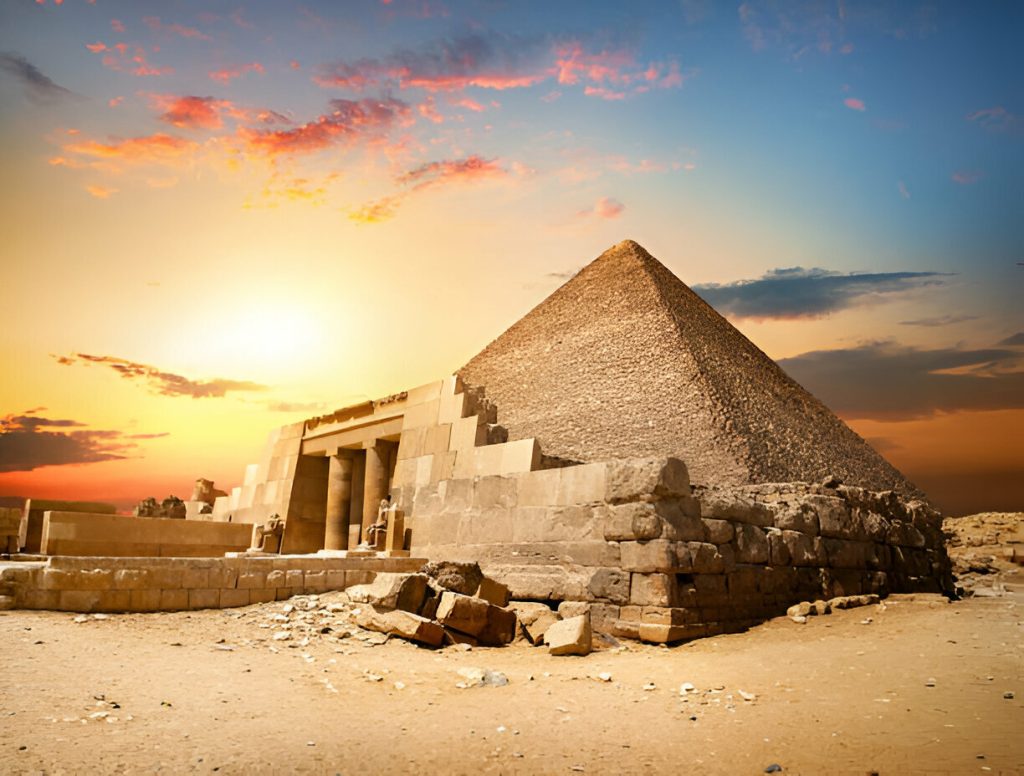
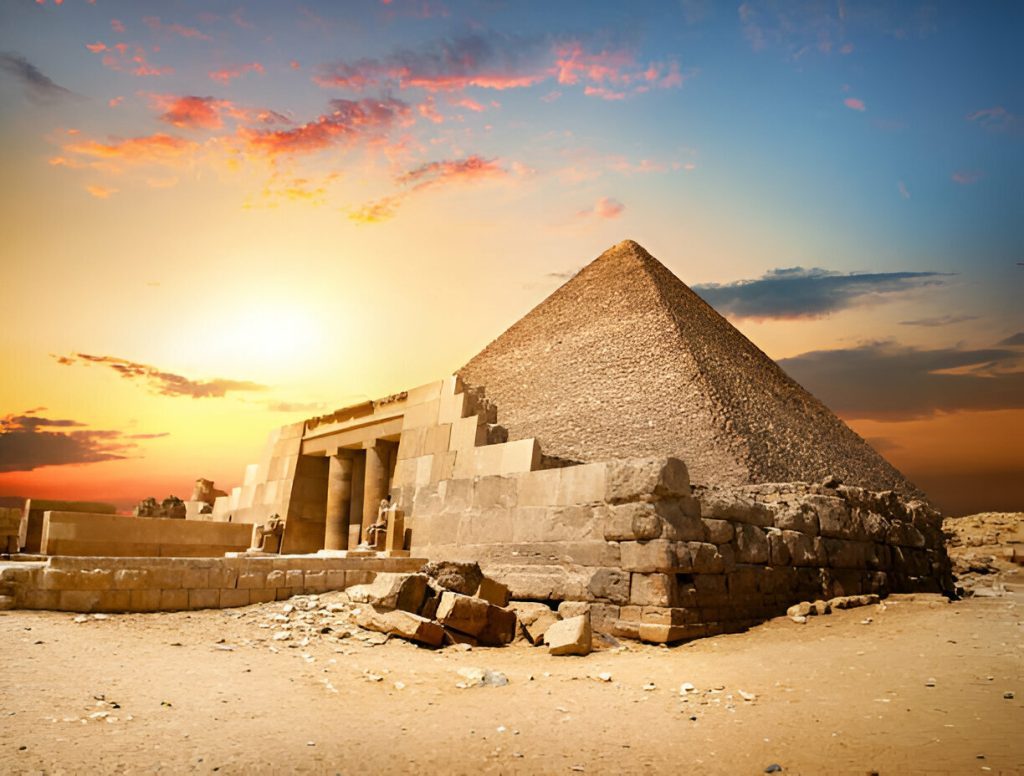
Stand beneath the Great Pyramid of Khufu, also known as the Great Pyramid of Cheops.
It is the largest pyramid on the Giza Plateau and the only surviving monument traditionally associated with the Seven Wonders of the Ancient World.
Your guide will explain how the pyramid formed part of a much larger funerary complex that included temples, smaller pyramids, causeways and surrounding tombs.
Entry inside the Great Pyramid normally requires a separate limited ticket unless it is explicitly included in your selected tour package.
The interior contains narrow, steep and enclosed passages. It may not be suitable for travelers with limited mobility, breathing difficulties or claustrophobia.
Request the interior ticket when booking if entering the Great Pyramid is an important part of your visit.
Pyramid of Khafre
Continue to the Pyramid of Khafre, also known as the Pyramid of Chephren.
The pyramid can appear taller than the Great Pyramid because it stands on higher ground and retains part of its original outer casing near the summit.
Your Egyptologist will explain the relationship between the pyramid, its temples, its causeway and the monuments located around the complex.
Pyramid of Menkaure
See the Pyramid of Menkaure, the smallest of the three principal pyramids at Giza.
Its smaller scale allows visitors to compare how royal funerary architecture developed during Egypt’s Fourth Dynasty.
Your guide will also point out some of the smaller pyramids and tombs surrounding the main monuments.
Panoramic View of the Giza Pyramids
Stop at one of the panoramic viewing areas on the Giza Plateau.
From this location, you can photograph the three main pyramids together and appreciate the scale of the surrounding desert landscape.
Your guide will help you identify the monuments and choose suitable photography positions.
The exact viewpoint may change according to traffic, site regulations, weather and accessibility.
Camel rides may be available as an optional experience.
Confirm the price, duration and conditions with your guide before taking part.
The Great Sphinx of Giza
Visit the Great Sphinx, one of the most recognizable monuments in Egypt.
The sculpture combines the body of a lion with a human head and is commonly associated with King Khafre.
From the designated viewing area, your guide will explain:
- The likely purpose of the monument.
- Its connection with the surrounding temple complex.
- The symbolism of the lion and royal image.
- How erosion and restoration affected the monument.
- The historical stories connected with the Sphinx.
You will have time to take photographs from the available visitor viewpoints.
Valley Temple of Khafre
Continue to the Valley Temple near the Great Sphinx.
Constructed from massive stone blocks, the temple formed part of the funerary complex connected with the Pyramid of Khafre.
Your Egyptologist will explain the temple’s architecture, ritual purpose and connection with the causeway leading toward the pyramid complex.
Your guide will also clarify the difference between established archaeological evidence and historical theories about the temple’s use.
Egyptian Lunch
After exploring the Giza Plateau, enjoy lunch at a selected local restaurant.
The meal provides an opportunity to relax before continuing to the Grand Egyptian Museum.
Inform the tour team in advance about:
- Vegetarian requirements.
- Food allergies.
- Religious dietary requirements.
- Medical dietary restrictions.
Additional drinks beyond those listed in your selected package may carry an extra charge.
Visit the Grand Egyptian Museum
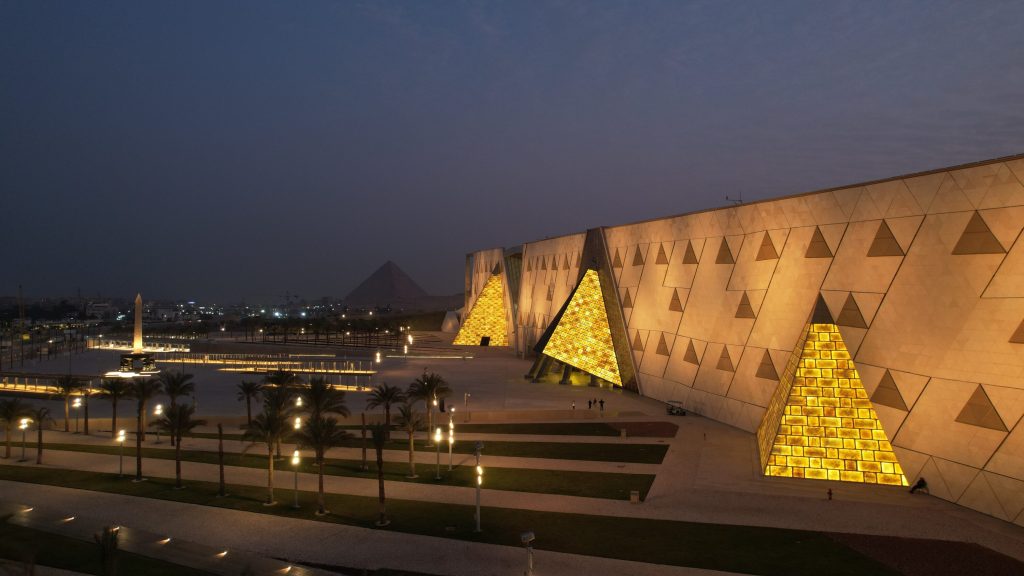
Continue to the Grand Egyptian Museum near the Giza Plateau.
The museum presents ancient Egyptian objects inside a large modern complex designed to guide visitors through different periods and themes of Egyptian civilization.
Your Egyptologist will select the most important galleries and objects according to the available time, current museum operations and your personal interests.
The museum portion may include:
- The Hanging Obelisk.
- The Grand Hall.
- The Grand Stairs.
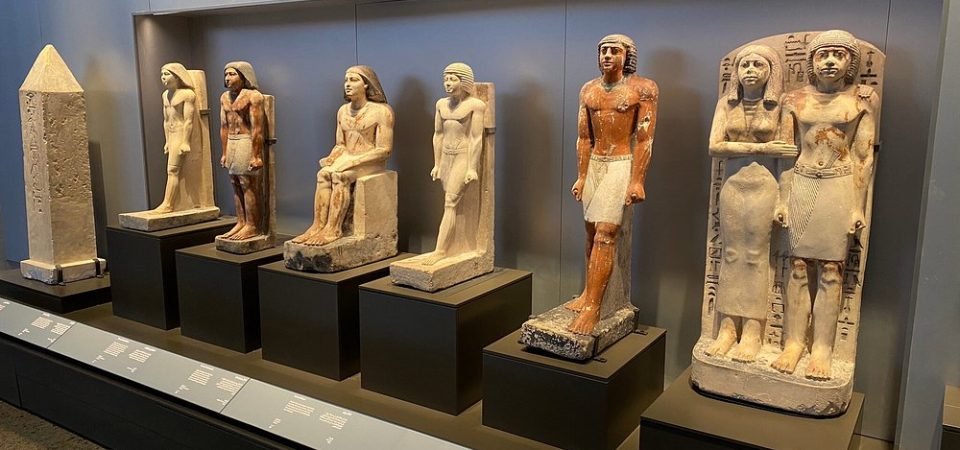
- Selected Main Galleries.
- The Tutankhamun Galleries.
- Khufu’s Boats Museum.
The exact route may change according to museum regulations, gallery availability and ticket conditions.

The Hanging Obelisk
Begin your museum experience near the Hanging Obelisk, one of the most distinctive features of the museum entrance.
The display allows visitors to view details that would normally remain hidden when an obelisk stands directly on its base.
Your guide will explain:
- The purpose of ancient Egyptian obelisks.
- Their relationship with solar worship.
- The meaning of royal inscriptions.
- How obelisks were constructed and transported.
The Grand Hall
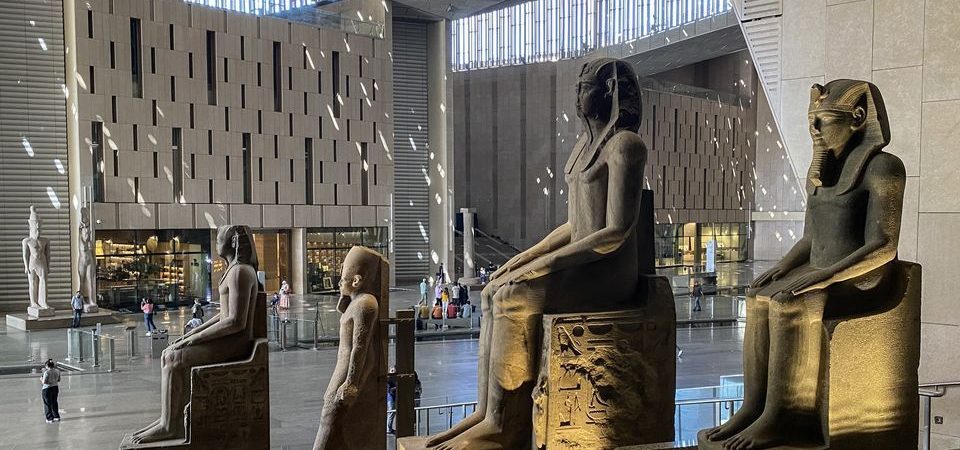
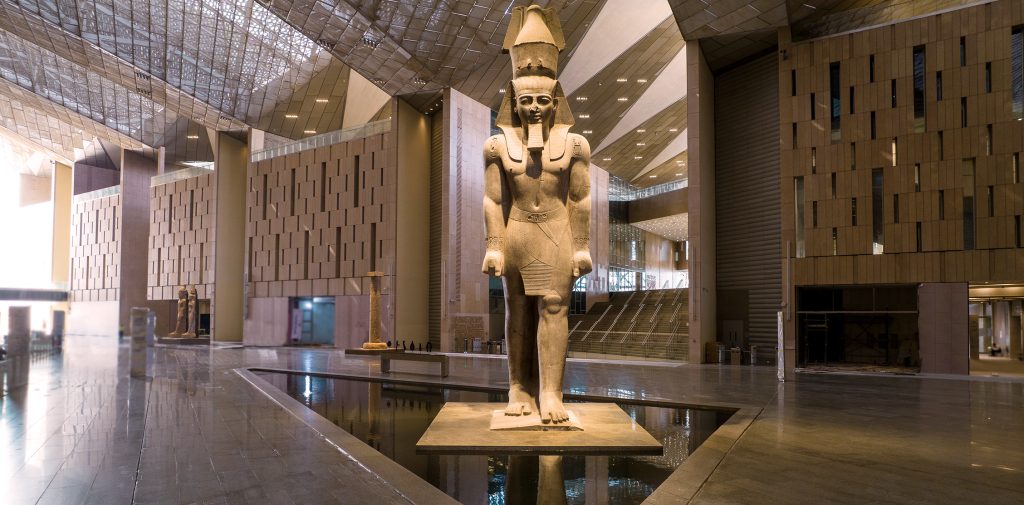
Enter the Grand Hall, where monumental royal statues welcome visitors to the museum.
The hall introduces the scale, symbolism and authority associated with ancient Egyptian kingship.
One of its most recognizable objects is the colossal statue of King Ramesses II.
Your guide will explain how royal statues represented:
- Political authority.
- Divine legitimacy.
- Protection of the kingdom.
- The relationship between the king and the gods.
- The public image of the pharaoh.
The Grand Stairs
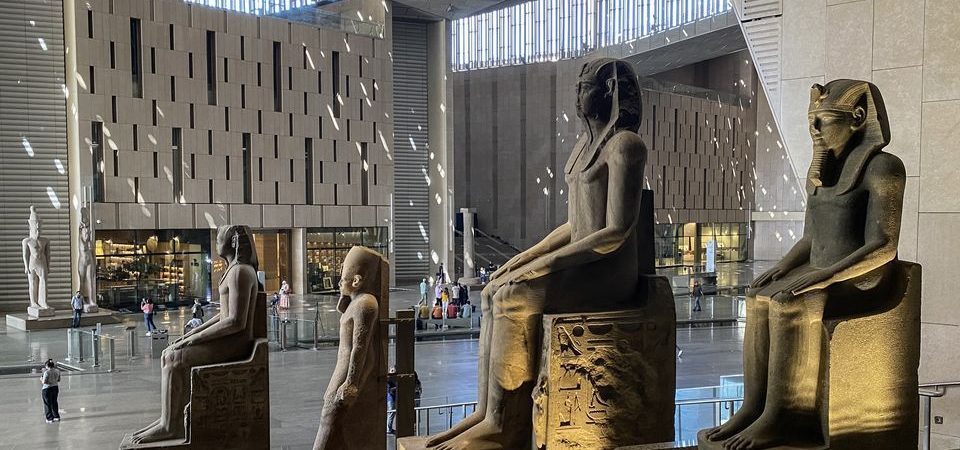
Continue through the Grand Stairs, where monumental statues and architectural elements are arranged around themes connected with ancient Egyptian kingship and religion.
The displays may explore:
- The royal image.
- Temples and divine houses.
- The relationship between gods and kings.
- Ancient Egyptian funerary beliefs.
- The journey into the afterlife.
- The role of royal monuments.
The Grand Stairs also provide impressive views through the museum’s architectural spaces.
The Main Galleries
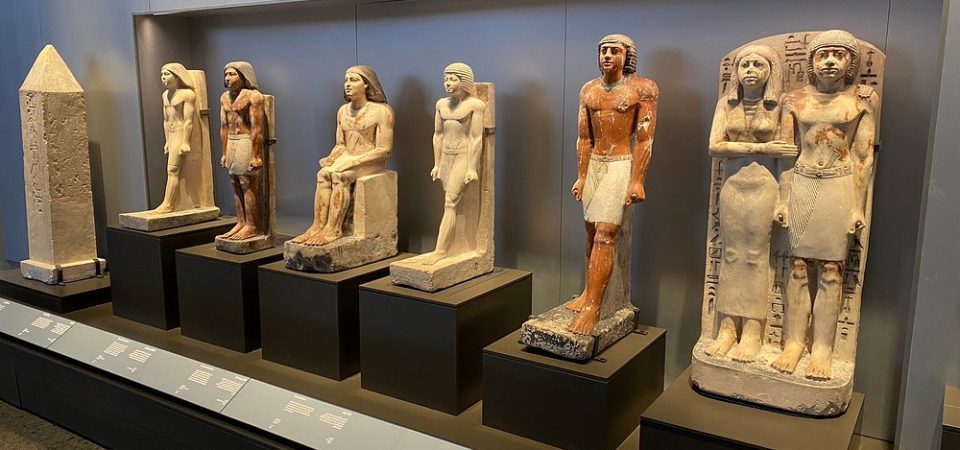
Explore selected areas of the Grand Egyptian Museum’s Main Galleries.
The galleries are organized to help visitors understand ancient Egyptian civilization through different historical periods and major themes.
Depending on the available time, your guide may focus on:
- Kingship and royal authority.
- Ancient Egyptian society.
- Religious beliefs.
- Funerary traditions.
- Daily life.
- Art and craftsmanship.
- Temples and ritual practices.
- The relationship between rulers and communities.
Because the museum is extensive, a combined full-day tour cannot cover every gallery and object in detail.
Your private Egyptologist will prioritize the displays most relevant to your interests.
The Tutankhamun Galleries
Discover the story of King Tutankhamun through objects associated with his family, life, reign, burial and journey into the afterlife.
The galleries may include:
- Royal jewelry.
- Ceremonial objects.
- Funerary equipment.
- Shrines.
- Coffins.
- Furniture.
- Personal belongings.
- Chariots.
- Objects connected with daily royal life.
- Items prepared for the king’s afterlife.
Your Egyptologist will place the objects within the wider context of the Eighteenth Dynasty and explain the discovery of Tutankhamun’s tomb.
The guide will also help you understand why Tutankhamun became one of the most famous pharaohs in modern history.
Khufu’s Boats Museum
Where admission and museum operations allow, visit the museum dedicated to the boats associated with King Khufu.
The boats were discovered near the Great Pyramid and later transferred to the Grand Egyptian Museum campus for conservation and display.
Their original function remains the subject of historical and archaeological discussion.
They may have been connected with:
- The king’s funeral.
- Royal transportation.
- Religious ceremonies.
- The symbolic journey of the king with the sun god.
- Ancient Egyptian beliefs about the afterlife.
Access should be confirmed before the tour because ticket categories and exhibition arrangements may change.

Return to Your Hotel
After completing the museum visit, meet your driver and return to your hotel in Cairo or Giza.
The final arrival time depends on:
- Your hotel location.
- Traffic conditions.
- Museum scheduling.
- Time spent at each attraction.
- Optional activities.
- The pace of your group.
Your private guide will remain available throughout the tour to answer questions and assist with practical arrangements.
Giza Pyramids and Grand Egyptian Museum Tour Prices
Adult price: From $120 per person
Child price: From $60 per child
Prices may vary according to:
- Travel date.
- Number of travelers.
- Selected ticket package.
- Pickup location.
- Child age.
- Optional pyramid interior tickets.
- Additional activities.
- Guide language.
- Peak-season arrangements.
- Special holiday dates.
The final price and exact inclusions will be confirmed before payment.
Check Availability
Why Combine the Giza Pyramids and GEM in One Day?
The Giza Plateau and the Grand Egyptian Museum are closely connected geographically and historically.
At the pyramids, you experience the monumental architecture constructed for ancient Egyptian kings.
Inside the museum, you examine statues, royal objects, funerary equipment and everyday artifacts that provide greater context for ancient Egyptian civilization.
Combining the two attractions allows you to move from archaeological sites to museum collections while the historical information remains fresh.
It also reduces the need to arrange separate transportation, guides and ticketing processes on different days.
This combined tour is particularly suitable for travelers who:
- Have limited time in Cairo.
- Want to visit two major attractions in one day.
- Prefer private transportation.
- Want professional historical explanations.
- Prefer a structured itinerary.
- Want hotel pickup and return included.
- Are comfortable with a full sightseeing schedule.
Travelers who want to study every museum gallery in detail may prefer to visit the Giza Plateau and Grand Egyptian Museum on separate days.
Why Choose a Private Egyptologist Tour?
Explore at a More Comfortable Pace
A private tour allows the itinerary to be adjusted within the limits of admission times and site regulations.
You can spend more time asking questions, taking photographs or focusing on specific historical periods.
Receive Clear Historical Context
The Giza Plateau and Grand Egyptian Museum contain an enormous amount of historical information.
An Egyptologist helps connect the pyramids, temples, royal statues, religious beliefs and museum objects into one understandable story.
Avoid Transportation Complications
Your private vehicle handles transfers between:
- Your hotel.
- The Giza Plateau.
- The lunch venue.
- The Grand Egyptian Museum.
- Your return destination.
This saves you from arranging separate taxis, navigating different entrances or coordinating multiple drivers.
Get Help with Tickets and Timing
Museum tickets may be connected to specific dates or admission periods.
Pyramid interior tickets may also be limited.
Your tour team will organize the admission arrangements listed in your confirmed package.
Receive a More Personal Experience
Your guide can adapt the explanations according to:
- Your previous knowledge.
- Your historical interests.
- Your group size.
- The ages of your children.
- Your walking ability.
- Your available time.
- Your preferred photography pace.
Reduce Unwanted Distractions
Your guide can help you navigate busy visitor areas, communicate with local service providers and understand which activities are included or optional.
You may request a no-shopping itinerary before the tour.
Important Information Before Booking
Tour Duration
This is a full-day private tour.
The exact duration depends on:
- Pickup location.
- Traffic conditions.
- Ticket times.
- Site opening hours.
- Time spent at each attraction.
- Optional experiences.
- Group pace.
Avoid scheduling an early evening flight or another time-sensitive activity immediately after the tour.
Grand Egyptian Museum Admission
The tour team will plan the itinerary according to the museum’s operating schedule and the admission time available for your travel date.
Museum opening hours, gallery access and ticket categories may change.
Your confirmed booking should clearly state:
- Whether GEM admission is included.
- The selected ticket category.
- The expected admission time.
- Whether special exhibitions are included.
- Whether Khufu’s Boats Museum is included.
What to Wear
Wear lightweight, comfortable clothing suitable for the season.
Recommended items include:
- Comfortable walking shoes.
- Sunglasses.
- Sun hat.
- Sunscreen.
- Light layers.
- A small personal bag.
- Any required medication.
Modest casual clothing is suitable for most visitors.
Avoid footwear that is difficult to use on sand, uneven stone or smooth museum floors.
Summer Travel
Temperatures at the Giza Plateau can be high during the summer.
Drink water regularly, use sun protection and follow your guide’s recommendations regarding walking and rest stops.
The outdoor section may begin earlier when weather conditions require it.
Photography
Personal photography is generally possible in many visitor areas, but specific rules may apply.
Inside the Grand Egyptian Museum:
- Flash photography may be prohibited.
- Tripods may not be allowed.
- Monopods may not be allowed.
- Selfie sticks may be restricted.
- Drones are prohibited.
- Commercial photography requires permission.
- Certain galleries may have additional restrictions.
Follow the instructions displayed inside each gallery.
Photography regulations at the Giza Plateau may also change according to the location, equipment and current site policies.
Bags and Security
Visitors and belongings may be inspected before entering the Grand Egyptian Museum.
Large luggage should not be brought on the tour unless arrangements have been confirmed in advance.
Bring only the items needed for the day.
Your guide will advise you if any personal items need to be stored before entering a gallery or attraction.
Accessibility
The Grand Egyptian Museum provides modern visitor facilities, but accessibility at the Giza Plateau can be more challenging.
The Giza Plateau includes:
- Sand.
- Uneven ground.
- Stone surfaces.
- Slopes.
- Long distances between some monuments.
- Narrow pyramid passages.
Travelers with mobility requirements should contact the tour team before booking.
The itinerary may be adjusted to reduce walking distances where possible.
Accessible transportation must be requested in advance and is subject to availability.
Families and Children
The tour can be suitable for families when the pace is adjusted to the ages of the children.
Parents should consider:
- The full-day duration.
- Outdoor heat.
- Walking distances.
- Museum attention span.
- Meal timing.
- Rest breaks.
- The suitability of pyramid interiors.
Request a shorter museum route or additional breaks when traveling with young children.
Children must remain supervised throughout the tour.
Senior Travelers
The private format makes the tour easier to adapt for senior travelers.
However, visitors should consider:
- Heat at the Giza Plateau.
- Uneven surfaces.
- Walking distances.
- Vehicle entry restrictions.
- Stairs and slopes.
- The physical conditions inside the pyramids.
Pyramid interior entry is not recommended for travelers who have difficulty using steep, narrow or enclosed passages.
Frequently Asked Questions
Can You Visit the Giza Pyramids and Grand Egyptian Museum in One Day? Yes. The Giza Plateau and Grand Egyptian Museum can be combined in one full-day private tour.
Does the Tour Include a Camel Ride? A camel ride is not included unless it appears in your selected package.
Is Shopping Compulsory? No. Shopping should not be a compulsory part of the historical itinerary.
Is the Tour Suitable for Children? Yes, the tour can be suitable for children when the pace is adapted.
Is the Tour Suitable for Senior Travelers? Yes, but the itinerary should be adjusted according to walking ability and health requirements.
When Should I Book? Book as early as possible during:
- Peak travel seasons.
- Public holidays.
- Christmas and New Year.
- Easter.
- School holiday periods.
- High-demand museum dates.
Book Your Private Giza Pyramids and Grand Egyptian Museum Tour
Experience the Giza Pyramids and the Grand Egyptian Museum with private transportation and the guidance of a professional Egyptologist.
Aperçu
Embarquez pour un voyage extraordinaire à travers le patrimoine de 7 000 ans de l'Égypte avec une visite guidée des Pyramides de Gizeh et du Grand Musée Égyptien. Cette aventure est une véritable chasse au trésor, révélant certaines des merveilles archéologiques les plus époustouflantes jamais découvertes.
Avec l'expertise d'un égyptologue professionnel et un transport sans faille, vous commencerez votre journée en explorant les célèbres pyramides de Gizeh et le mystérieux Sphinx. Ensuite, plongez dans le monde de l'Égypte ancienne au Grand Musée Égyptien, qui abrite une remarquable collection d'artefacts, de trésors royaux et de reliques magnifiquement préservées.
Points forts
- Pyramides de Gizeh
- Le Sphinx
- Le Temple de la Vallée
- Le Grand Musée Égyptien