


 BLOG
The Unfinished Obelisk is a giant granite obelisk that still lies in an ancient quarry in Aswan, about 42 metres (roughly 138 feet) long and still attached to the bedrock at its base. Work stopped when cracks appeared in the stone, so it was never cut free or raised. Today the quarry shows the job frozen halfway: the trench, the tool marks and the cracks that ended it. On our private Aswan sightseeing tour, the obelisk is the second stop of the day, after the Aswan High Dam and before lunch and Philae Temple.

Quick facts
- Where: the ancient granite quarries of Aswan, southern Egypt.
- Size: about 42 m (roughly 138 ft) long; planned weight more than 1,000 tonnes.
- Usually attributed to: Queen Hatshepsut, 15th century BC (not certain).
- Why it was left: flaws and cracks in the granite.
- On our tours: stop two on the Aswan sightseeing tour (from $130 per adult), and part of our day trip from Luxor (from US$230 per adult).
- Bring: comfortable walking shoes, a hat, sun protection and water. Shade is limited.
What Is the Unfinished Obelisk?
The Unfinished Obelisk is a huge obelisk that ancient stonecutters began carving straight out of the granite bedrock in Aswan but never finished. It is generally attributed to Queen Hatshepsut in the 15th century BC and was probably meant for the Temple of Amun at Karnak, although no one knows this for certain. Had it been completed, it would have been taller than any obelisk the ancient Egyptians are known to have raised. Sand covered it for thousands of years, and it was studied in the early twentieth century.
The Ministry of Tourism and Antiquities describes it as a monument that would have stood around 42 metres high. If you are planning both cities, our overview of Luxor and Aswan shows where the obelisk sits among the other sights of the south.
Why Was the Unfinished Obelisk Never Raised?
The Unfinished Obelisk was never raised because flaws and several cracks appeared in the granite while it was being carved, and the work was abandoned. What caused the cracks is not certain. Once the stone had split, the block could no longer become a sound obelisk, so the workers left it where it lay, still joined to the rock beneath it.
For visitors, that failure is the point of the visit. A finished obelisk standing in a temple shows you the result. This one shows you the work in progress, a stage that completed monuments no longer show.
What Will You See at the Unfinished Obelisk?
At the Unfinished Obelisk you see the long granite shaft lying in its quarry, the trench the workers cut around it, tool marks on the stone and the cracks that ended the project. A visitor route runs along the quarry, so you look at the obelisk from several sides.
The Obelisk in Its Trench
The obelisk lies in the quarry where it was cut, still attached to the bedrock at its base. Standing beside it gives you a sense of its size. Walk the route slowly and look at it from different points before you take your pictures.
Tool Marks and Cracks
Workers shaped the granite by pounding it with balls of dolerite, a stone harder than granite, to cut channels around the obelisk. The marks of that work and the unfinished surfaces are still visible, along with the fissures that stopped it. Your Egyptologist uses these details on the spot to explain how the quarrymen worked and why the project was never completed.
What Your Guide Explains
According to our tour page, your guide will explain:
- How ancient workers planned the shape of an obelisk.
- How the surrounding granite was removed.
- Why stone quality was essential.
- How cracks could force workers to abandon a project.
- How completed obelisks may have been transported.
- Why obelisks were associated with kingship and solar beliefs.
Aswan was an important source of granite for temples, statues, sarcophagi and obelisks across ancient Egypt, so the quarry also helps you picture where the stone for many monuments came from.
How Does the Obelisk Fit into a Day with the High Dam and Philae?
On our private Aswan sightseeing tour, the Unfinished Obelisk is the middle of the three sights: the High Dam comes before it, then lunch and the boat to Philae Temple come after. According to the tour page, the day runs like this:

- Morning pickup from your Aswan hotel or another confirmed pickup point. Cruise passengers share their vessel name and docking details.
- Aswan High Dam: the viewing area over the dam and Lake Nasser, with time for photos.
- Unfinished Obelisk: the ancient granite quarry and the visitor route along the obelisk.
- Lunch at a local restaurant, listed as part of the current tour package.
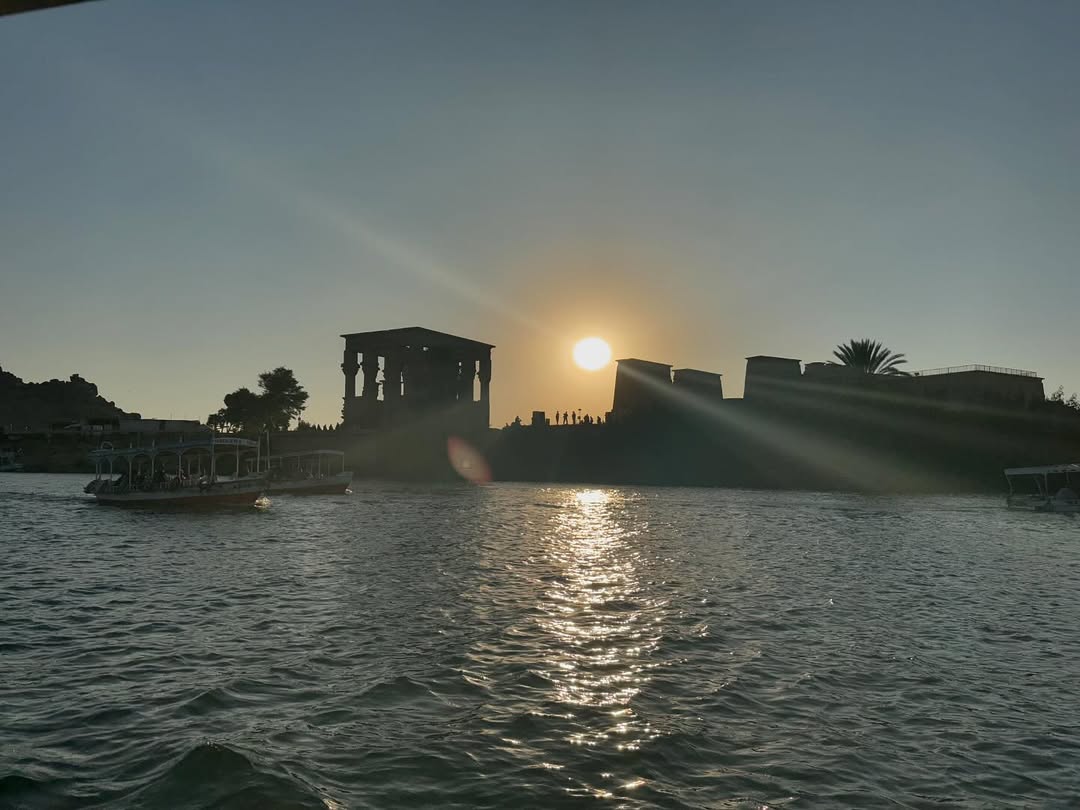
- Philae Temple: a local motorboat from the marina to Agilkia Island and a guided visit of the temple of Isis.
- Return by boat to the marina and by private vehicle to your hotel or Nile cruise.
The final visiting order may change with opening times, traffic, marina conditions and your pace, and in especially warm periods the obelisk visit may be scheduled earlier. The tour page does not set a fixed number of minutes for each stop; your private guide sets the pace with you.
The order also works as a story. At the dam you hear about modern engineering on the Nile, at the quarry you see how ancient Egyptians worked stone, and at Philae you end with temples and religion.
The tour starts from $130 per adult and $55 per child. Prices may vary with the date, group size, child ages, pickup location, language and any additions. The inclusions list pickup and return in Aswan, a private air-conditioned vehicle, a private Egyptologist, entrance fees to the listed attractions, bottled water, taxes and lunch according to the current package. Your booking voucher should state whether the local boat fare to Philae is included, so check it when you book.
Coming from Luxor?
Our private day trip to Aswan from Luxor includes the obelisk too, in a different order: Philae Temple, then the High Dam, then the Unfinished Obelisk, followed by a lunch break, Aswan Market and a Nubian Village before the evening return to Luxor. It is a long road journey each way and needs a very early start, and the exact sequence may change on the day. It starts from US$230 per adult and US$120 per child, and lunch is part of the day when it appears in your confirmed package; otherwise your guide can recommend a restaurant. Avoid booking a tight flight or train straight after it.
If you are already staying in Aswan, or your Nile cruise is docked there, the local Aswan sightseeing tour is the more time-efficient choice.
Tips for Visiting the Unfinished Obelisk
The quarry is exposed to the sun, with limited shade and uneven surfaces, so dress for heat and walking. Our tour page recommends:
- Comfortable walking shoes.
- A hat or cap and sunglasses.
- High-SPF sunscreen.
- A reusable water bottle.
Stay on the visitor route. For photos, shoot the obelisk from several angles to show how it sits within the quarry, and protect your phone or camera from direct heat and dust. The cooler months are generally more comfortable for outdoor sightseeing in Aswan. If you have reduced mobility, tell us before booking: the site has uneven terrain, and full step-free access cannot be assumed.
Is the Unfinished Obelisk Worth Visiting?
The Unfinished Obelisk is worth visiting if you want to understand how the ancient Egyptians made their monuments, because it shows the work at a stage no finished obelisk can. It is not a temple with painted walls, so the visit is about scale, stone and story. With an Egyptologist explaining the marks and cracks in front of you, a stretch of rock becomes a clear lesson in ancient stoneworking. On our tour it sits between the High Dam and Philae, so it fits into a day you are likely to spend in Aswan anyway.
Frequently Asked Questions
How much did the Unfinished Obelisk in Aswan weigh?
It was never finished or moved, so its weight is an estimate. Estimates differ, but all put the planned obelisk at more than 1,000 tonnes; the Ministry of Tourism and Antiquities gives 1,168 tonnes.
How tall would the Unfinished Obelisk have been?
About 42 metres (roughly 138 feet). Had it been completed, it would have been taller than any obelisk the ancient Egyptians are known to have raised.
Who ordered the Unfinished Obelisk?
It is generally attributed to Queen Hatshepsut in the 15th century BC, probably for the Temple of Amun at Karnak, but this is not certain.
Is entry to the Unfinished Obelisk included on your tour?
The current package of our Aswan sightseeing tour lists entrance fees to the listed attractions, which include the Unfinished Obelisk. Confirm the final inclusions on your booking voucher.
Can I visit the Unfinished Obelisk from a Nile cruise?
Pickup or return at a Nile cruise may be possible when the vessel’s location and schedule are confirmed in advance. Send us the cruise name, docking location and the time you need to be back.
Plan Your Visit
The Unfinished Obelisk shows how ancient Egypt’s monuments were made in a way a finished temple cannot, and it is easy to combine with the High Dam and Philae in one private day. Send your date, group size and hotel or cruise name through our Aswan sightseeing tour page, or contact us for a private quote. For more ideas in the city, browse our Aswan tours. We look forward to showing you the quarry where an obelisk was left behind.
