


 Uncategorized
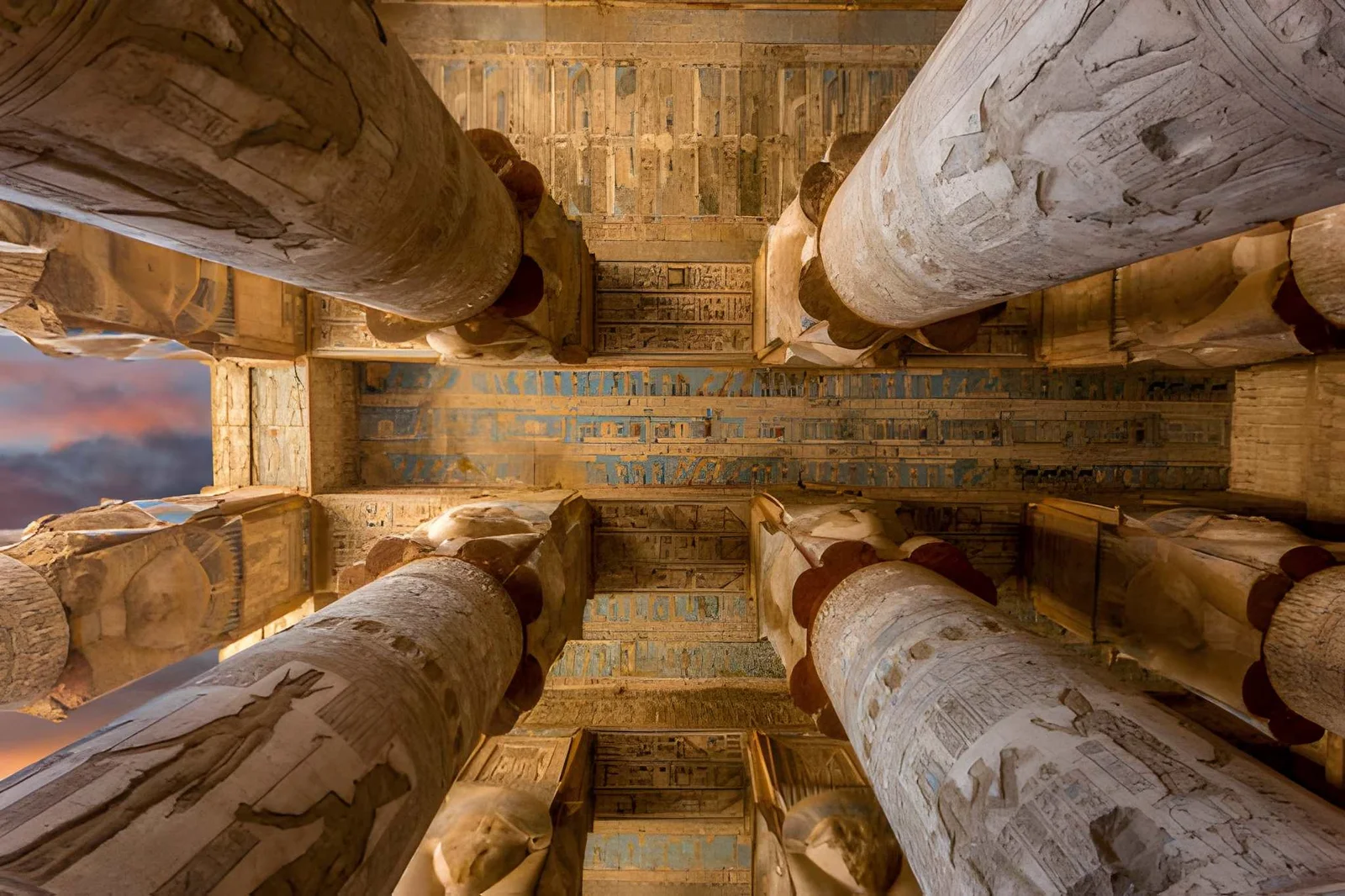
A visit to the temples of Dendera and Abydos provides two very different experiences: the astronomical decoration in the Temple of Hathor and the royal and ritual scenes in the Temple of Seti I. Dendera rewards visitors who look up. Abydos calls for a closer look at carved scenes, sacred chapels and royal names. According to the Ministry of Tourism and Antiquities of Egypt, Dendera is one of the best-preserved temples in the country, while Abydos is particularly associated with the elaborately decorated monument of Seti I.
For Luxor-based travellers, combining both sites means a full day rather than squeezing in another stop on a busy sightseeing schedule. Here’s what to see, how the temples differ and what you need to check before booking a Dendera and Abydos Temples Tour.
Why Visit Dendera and Abydos Together?
The best reason to combine these sites is contrast. Although both preserve ancient Egyptian religious traditions, they belong to different historical periods and reward different kinds of attention.
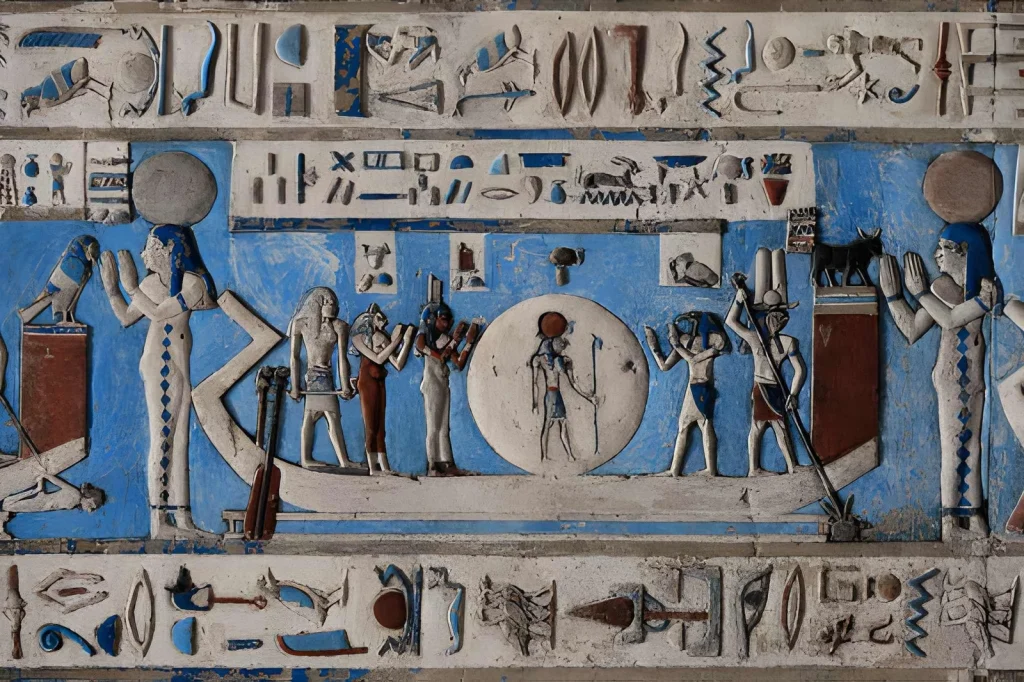
The surviving temple of dendera is largely Ptolemaic in date, but the site shows evidence of much older sacred structures. It is decorated with astronomical imagery and columns topped with Hathor’s face. Seti I’s temple at Abydos belongs to an earlier royal context and has a distinctive arrangement of seven chapels and an important royal ancestor list.
Together, the temples show how rulers, priests and artists expressed divine authority through architecture and ritual imagery. A Dendera and Abydos temples tour allows visitors to explore these differences and understand the distinct religious and historical significance of each site..
Dendera and Abydos at a Glance
| Feature | Dendera | Abydos |
| Main monument | Temple of Hathor | Temple of Seti I |
| Standout features | Hathor-headed columns, astronomical ceiling decoration | Carved ritual scenes, seven chapels and a royal ancestor list |
| Best viewing approach | Alternate between architectural details and overhead decoration. | Describe the scenes and arrangement of the chapel as you go along |
| Historical focus | Ptolemaic temple, over an older sacred site | The royal and religious building project of Seti I |
The above main differences and features are noted in the descriptions of the temple of Seti I by Egypt’s ministry of antiquities and specialists.
Dendera: What to See Inside the Temple of Hathor
Begin with the Columns and the Main Hall
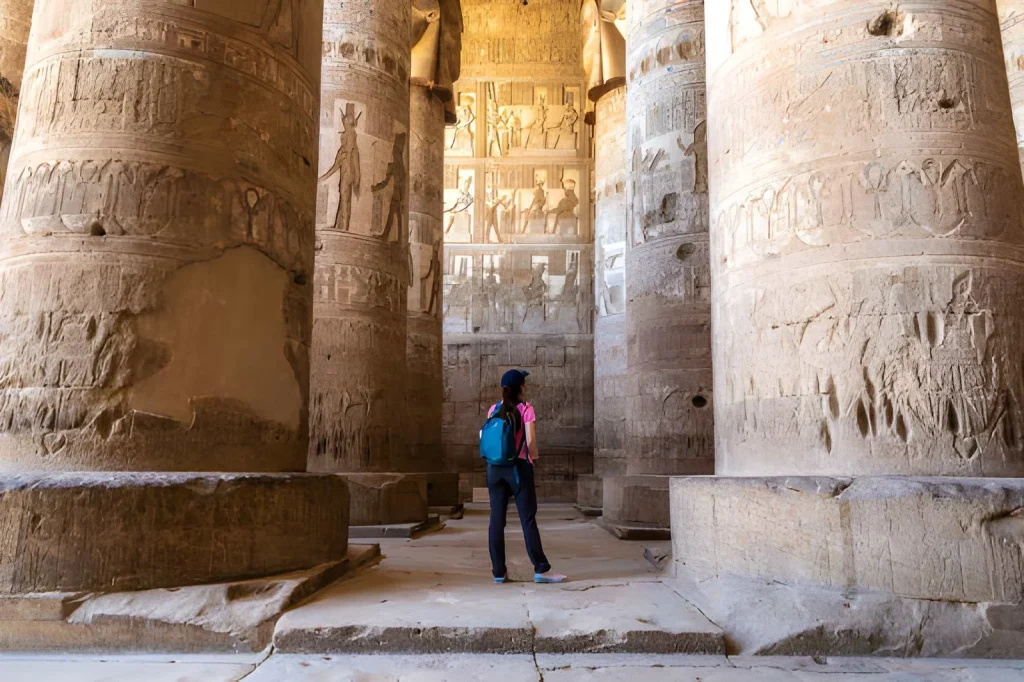
The dendera temple is dedicated to the goddess Hathor, goddess of music, joy, dance, motherhood, and the sky. These links help explain the mixture of musical symbolism and celestial imagery in the building. At the entrance, six giant columns bear Hathor’s head, surrounded by shapes related to the sistrum, a musical instrument connected with the goddess.
Instead of heading straight for the inner rooms, stop at the entrance. Compare the column capitals and consider the proportions of the façade.Ask your guide how these features serve to introduce the religious purpose of the temple.
This first stop on a Dendera and Abydos temples tour offers a useful introduction to reading a sacred building. Decoration was not just added for visual effect: its location helped to communicate the identity of the deity, and the function of the space.
Look Up at the Astronomical Ceiling
The dendera temple ceiling is one of the main attractions of the site. The Ministry of Tourism and Antiquities in Egypt emphasised its astronomical engravings, describing the ceiling decoration as “one of the main features of the monument.”
Don’t rush through it just to take a photograph. Give yourself time to look at it. A guide can distinguish identifiable figures from more complex religious and astronomical imagery.
Take one wide shot to show the relationship between the ceiling and the columns, then move to details. But check the rules before using a tripod, extra lighting or other equipment. Never take for granted that all kinds of photography are allowed in your itinerary.
Where Is the Original Dendera Zodiac?
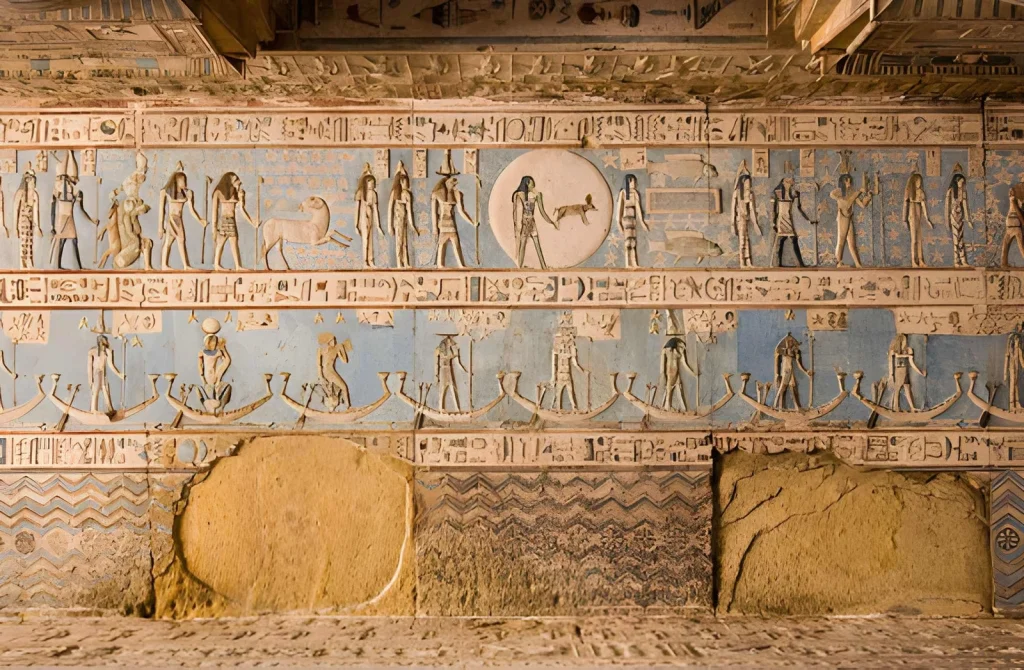
The dendera zodiac was originally part of the ceiling of an Osiris chapel on the roof of Hathor’s sanctuary. The original carved slab is in the Louvre today in Paris, not at the Egyptian site. The collection register of the Louvre bears the record of its removal in 1821, and later acquisition in France.
This is important when choosing a tour of the temples of Dendera and Abydos. The description of the “original zodiac at Dendera” would be misleading.
For the object’s provenance and present location, see the official collection record of the Louvre. Meanwhile at Dendera, look at the surviving monument and the wider relationship between celestial decoration and temple worship.
Check Roof and Crypt Access
In 2020, three crypts and the rooftop were opened to visitors, restoration reporting says. That historic opening does not mean that every area will be open on your travel date.
Before booking, ask if the proposed visit includes access to the roof or crypt, if there is an extra ticket for these areas and if the route includes narrow passages or stairs. If those areas aren’t available, the main temple is still worth a leisurely visit.
Abydos: Exploring the Temple of Seti I
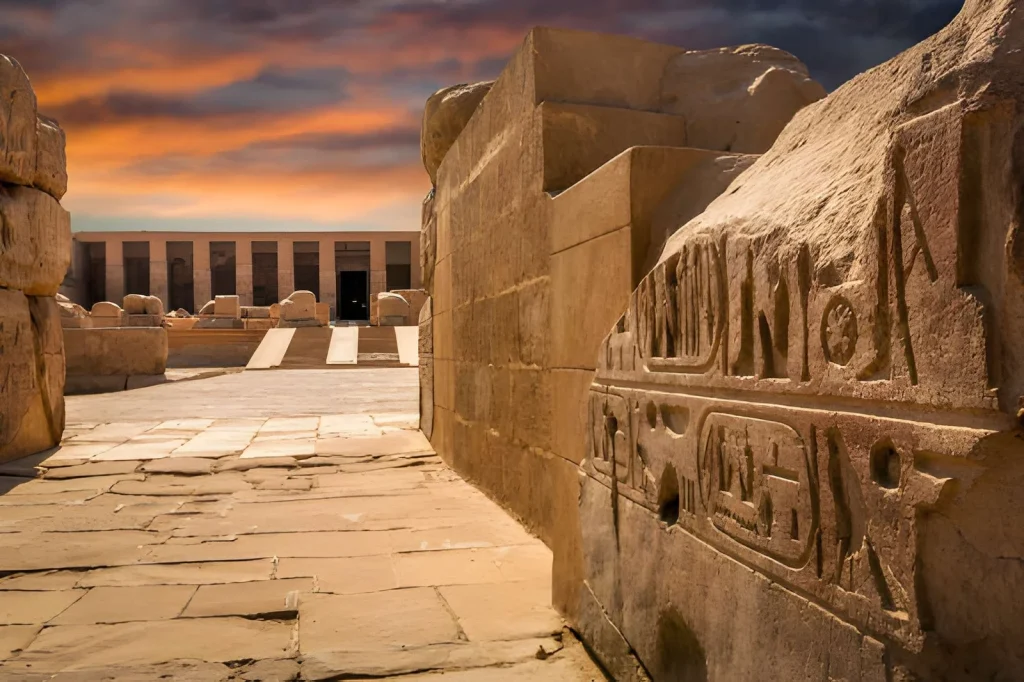
As it pertains to sightseeing, the phrase abydos temple usually refers to the Temple of Seti I. However, Abydos is a larger archaeological site and a visit there should state which monuments will be seen.
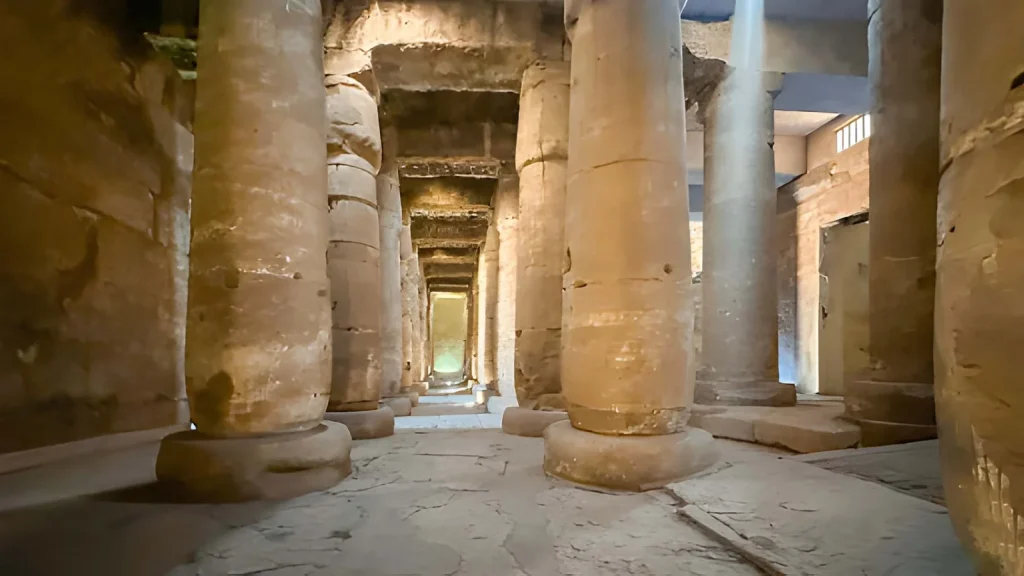
Seti I built the main temple, which featured hypostyle halls, seven chapels and an Osiris complex. A hypostyle hall is a roofed space with columns supporting the roof. If you know what it looks like, it is easier to follow the progression through the building.
A Dendera and Abydos temples tour that is well-paced should allow time to understand this sequence, rather than rushing from one famous feature to the next.
Locate the Seven Chapels
The temple had seven chapels devoted to the deified Seti I and to Ptah, Ra-Horakhty, Amun-Ra, Osiris, Isis and Horus.Their arrangement brings several major religious traditions together within the same royal monument.
When you visit the temple of abydos, ask your guide to compare the scenes in two or three chapels. It is more useful to study the repeated gestures, offerings and divine attributes, than to try to remember the name of every deity.
This is where an informed guide can add a lot of value. To identify the figures on the wall is not enough; the scenes must be explained in terms of ritual and kingship.
Discover the Abydos King List
The Abydos King List shows Seti I and Prince Ramesses paying homage to 76 royal ancestors. It is a religious portrayal of royal lineage and a historical source, not an unbiased modern timeline of all monarchs.
That difference makes it especially interesting. The wall is an example of the way kingship represented its relationship to the past. Historians compare such records with other evidence.
When you take a tour of the Dendera and Abydos temples, ask your guide what the scene was supposed to do inside the temple. But a simple tally of names is less meaningful than knowing its ritual context.
Ask About the Osireion
Tour guides often tell you that the Osireion lies behind the main temple, but being on a tour doesn’t mean you can go there when you want. One published Luxor excursion includes it with Seti I’s temple and the royal ancestor list.
Ask if your visit includes a viewing stop, what you can see now and how long you’ll have. Additional monuments should be considered additions to the main experience, not reasons to hurry the main temple.
Tour to Dendera and Abydos Temples from Luxor
Book a Full Day
For travellers researching a Dendera and Abydos day trip from Luxor, the trips generally allow for about 9–12 hours for the combined tour. One advertised trip departs Luxor about 6:00 AM, arrives at Abydos about 9:00 AM, and returns about 6:00 PM. These are operator estimates, not guaranteed journey times.
In practice, this means some flexibility in the eveningKeep your evening plans flexible. A Dendera and Abydos temples tour involves substantial road travel, so a tightly scheduled dinner reservation or onward departure could add unnecessary pressure.
Request a written itinerary showing:
- Hotel pickup location, departure time, and expected return time.
- The order of the two visits to the temple.
- Estimated time at each location.
- Lunch and comfort breaks.
- Whether the guide is with you all the way.
- Which admission tickets and additional areas are included.
Plan the Route Around Your Priorities
One published itinerary visits Abydos first, then Dendera before returning to Luxor. Other operators may have different route layouts.
Do not say that you want it in a particular order; just explain what you want first. If carved scenes are your main interest, then ensure you allow enough time at Abydos. If architecture and celestial decoration are your main interests, allow plenty of time at Dendera rather than leaving it as a rushed final stop.
The deciding variable is the time spent at the monuments, not the number of stops advertised.
Use a Flexible Sample Itinerary
Here is a suggested planning framework, not an official schedule:
| Part of the Day | Suggested Activity |
| Early morning | Depart Luxor after confirming pickup and itinerary for the day |
| Morning | Visit the temple of Seti I, discuss its chapels and list of royal ancestors |
| Midday | Take a planned lunch and comfort break |
| Afternoon | Explore Hathor’s sanctuary, allowing enough time to appreciate its columns and astronomical ceiling decoration. |
| Late afternoon/evening | Return to Luxor with time for delays |
Request protected sightseeing time for a Dendera and Abydos temples tour before accepting an itinerary loaded with optional stops.
Booking, Tickets and Practical Preparation
Find Out What You’re Really Paying For
It is difficult to compare a low headline price unless the inclusions are clear. Before you pay, check policies for transport, guide, admission, meals, pickup, cancellation.
Also ask if private tour is a private vehicle and private guide. Those are separate services and the booking description should make that distinction clear. If you are considering a private Dendera and Abydos tour from Luxor, confirm whether the itinerary can be adjusted to your interests and whether both temple visits are included in the quoted price.
Old article about ticket prices? Don’t believe it. Check the available listings and conditions on the official ticketing portal linked to the Ministry. The portal features Egypt’s Ministry of Tourism and Antiquities and visitor support information.
Check Hours Before You Go
The official Abydos ticket listing shows a 7:00 AM opening and a 4:00 PM last entry for its regular summer and winter schedules, with a different last-entry time for Ramadan. It also suggests arriving at least one hour prior to closing. Check the listing for your actual date; don’t assume these are permanent times.
A tour of the temples of Dendera and Abydos should be based on confirmed access, not on the driver’s preferred time of departure.
Pack for a Long Sightseeing Day
A useful packing checklist is:
- Comfortable shoes for difficult terrain.
- Snack and water.
- Sun protection for the outer sections.
- A charged camera/phone and some extra power.
- Any personal medication needed.
- Your identification requested by the operator and your booking confirmation.
If you have mobility limitations, ask specifically about steps, walking distances, vehicle access and confined spaces. “Suitable for everyone” is not enough for the purpose of a full accessibility statement.
The Egyptian Ministry’s monument description is an authoritative introduction to the temple of hathor and its main features before visiting.
Questions & Answers
Is It Possible to See Both Temples in One Day from Luxor? Yes, published combined excursions run for about 9–12 hours. Rather than assuming a short trip, plan for a full day and ask the operator when they expect to return.
Should I Hire a Guide? If you want to make sense of ritual scenes, divine attributes and why the royal ancestor list exists, a guide is especially helpful. When booking, ask about qualifications, language ability and if guided time is included at both sites. If you prefer specialist historical interpretation, a Dendera and Abydos tour with Egyptologist guide may suit your interests, provided the operator confirms the guide’s qualifications and availability.
When Is the Best Time to Visit Dendera Temple in Egypt? For a more comfortable sightseeing experience, many travellers prefer the cooler months between October and April. However, conditions can vary, so check the forecast before departure and choose a schedule that allows enough time for both temples. When researching the best time to visit Dendera Temple Egypt, consider your heat tolerance, the season and the amount of time you want to spend exploring the monuments.
Are Photography and Video Allowed Inside Dendera and Abydos Temples? Photography rules may vary between Dendera and Abydos, especially for video recording or professional equipment. Check the current regulations at each site before your visit, and ask whether any additional fees or permits are required.
Is a Private Tour Better Than a Group Tour to Dendera and Abydos? A private tour offers more flexibility and a personalized experience, while a group tour is often more affordable. Your choice depends on your budget and preferences.
Are There Any Nearby Attractions to Visit Alongside Dendera and Abydos Temples? Yes, you may be able to visit nearby historical sites along the route, depending on your itinerary. Ask your tour operator about available stops before booking.
Conclusion
A tour of the temples of Dendera and Abydos is most rewarding if the itinerary allows for observation and explanation. Dendera is a good introduction to the architecture and celestial iconography of Hathor. Abydos offers a more in-depth view of royal ritual, sacred chapels, and the depiction of kingship in its ancestral form.
Book against those experiences, not a list of extras packed full. Check access now, ask about what’s included and keep the evening open. The trip unfolds at a realistic pace to become a coherent exploration of two different expressions of ancient Egyptian sacred life—not just a long drive between photo stops.
Contact Us to plan your Dendera and Abydos temples tour and learn more about your travel options.

