


 BLOG
You don’t need to visit every temple in Egypt to enjoy a journey rich in history. What matters most is choosing sites that spark your curiosity and offer something different at each stop. One temple may impress you with its towering columns, while another draws you in with colorful ceilings and intricate wall carvings. Elsewhere, stories of rulers and religious rituals reveal glimpses of life in ancient Egypt.
If you are researching temples in Egypt, this guide explains what distinguishes eight remarkable sites and how each could fit into your journey. Rather than rushing through a long checklist, you can plan a route that suits your interests, whether you enjoy exploring ancient architecture, uncovering historical stories, or discovering somewhere new. You will also find practical questions to ask before booking, whether you prefer a private guide, a day trip, or a longer Nile itinerary.
Which temples in egypt Should You Prioritize?
If this is your first visit, choose temples that offer a mix of experiences. Start with a vast religious complex, explore a temple whose halls and passageways still reveal its original layout, and include a site with a beautiful natural setting. The list below highlights what makes each temple distinctive, helping you choose the ones that best suit your interests and itinerary.
| Temple | Main reason to include it | Suggested role in your itinerary |
| Karnak | Monumental scale and layers of royal building | A major Luxor visit |
| Tempio di Luxor | A historic sanctuary within the modern city | A separate East Bank experience |
| Hatshepsut | Terraced architecture and a female pharaoh’s royal narrative | Part of a West Bank day |
| Philae | An island setting and the worship of Isis | An Aswan excursion |
| Abu Simbel | Colossal rock-cut façades | A dedicated southern extension |
| Edfu | An unusually complete temple layout | A stop between Luxor and Aswan |
| Kom Ombo | A sanctuary shared by two gods | A contrasting riverside visit |
| Dendera | Astronomical ceilings and Hathor imagery | An excursion beyond central Luxor |
1. Karnak Temple: Discover the Splendor of Ancient Egypt
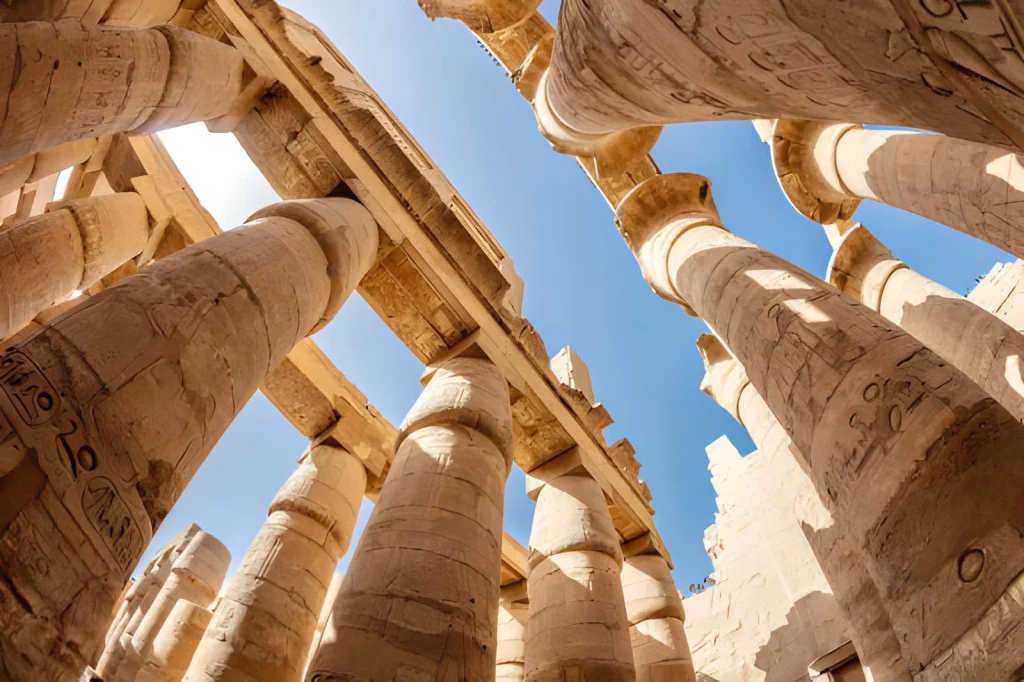
Karnak is an interesting place to view the evolution of temples in Egypt over generations. Over the course of some 2,000 years the complex grew, with successive pharaohs adding gateways, chapels, obelisks and decorated halls. The main sanctuary was dedicated to Amun, but the complex had administrative and storage functions in addition to a religious one.
One of the highlights of the visit is the Great Hypostyle Hall. It has 134 closely spaced columns in rows, massive things with capitals and carved surfaces worthy of a closer look. The impressive size of these details aside, they also demonstrate the care taken in designing the hall. Don’t miss the Sacred Lake, linked to the purification rites performed by the temple’s priests.
For travelers looking for the best ancient temples to visit in Egypt, Karnak provides the opportunity to explore many periods of history in one place. See how different rulers have left their imprint on architecture and writing. And allow some time to wander from the main hall.
See the best private temple tours in Egypt, check out which areas of Karnak they cover, and whether you have time to take pictures and ask questions.
2. Luxor Temple: Explore Ancient History in the Heart of the City
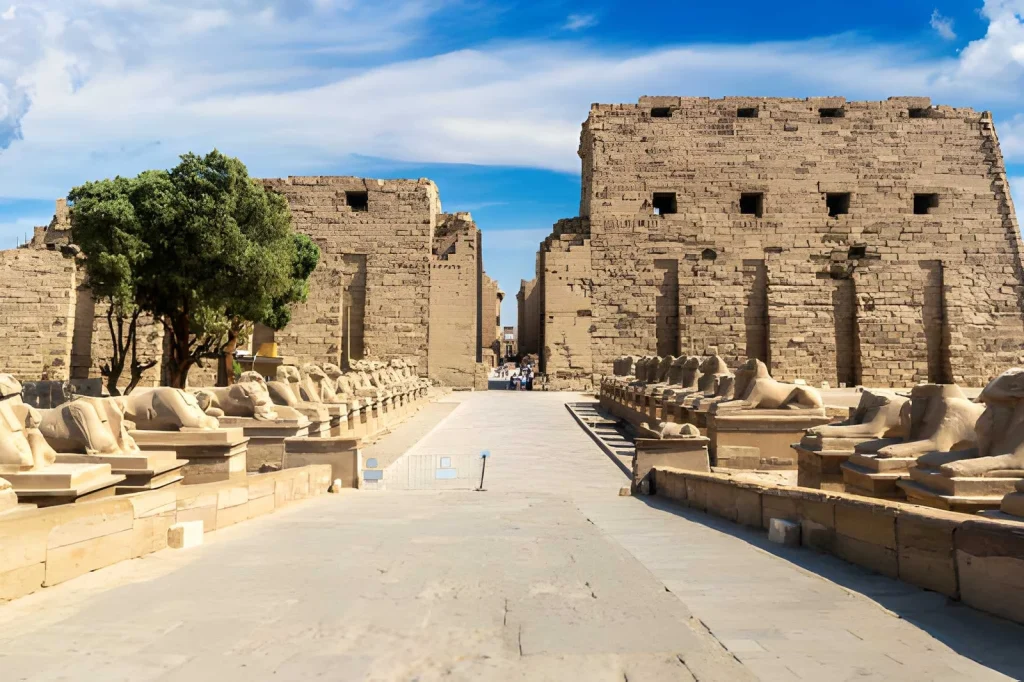
In the heart of the modern city, the Luxor Temple is aligned on its main axis with the Nile. Some of the main rulers who contributed to its construction were Amenhotep III and Ramesses II, leaving courtyards, columns and statues that shape the visit today.
The Avenue of Sphinxes, which links Luxor Temple to the Karnak Temple Complex, is also a must-see. This ceremonial way lined with sphinx and ram-headed statues was used for religious processions and celebrations especially the Opet Festival which symbolically renewed the relationship between Amun and kingship.
If karnak and luxor temple are two sites that you have searched for, consider them to be complementary experiences. Karnak is impressive for its size and monumental architecture while Luxor Temple is a more intimate visit right in the center of town.
In the evening a visit adds another dimension, the lighting accentuating the details of the columns and statues.
When comparing the best Luxor temple tours with a guide, check how long you will spend at each site and if they offer an evening visit or not. Luxor Temple is a good option among the temples in Egypt if you want to mix up ancient history with exploring the surrounding city.
3. Hatshepsut’s Temple: Discover the Story of One of Egypt’s Most Powerful Queens
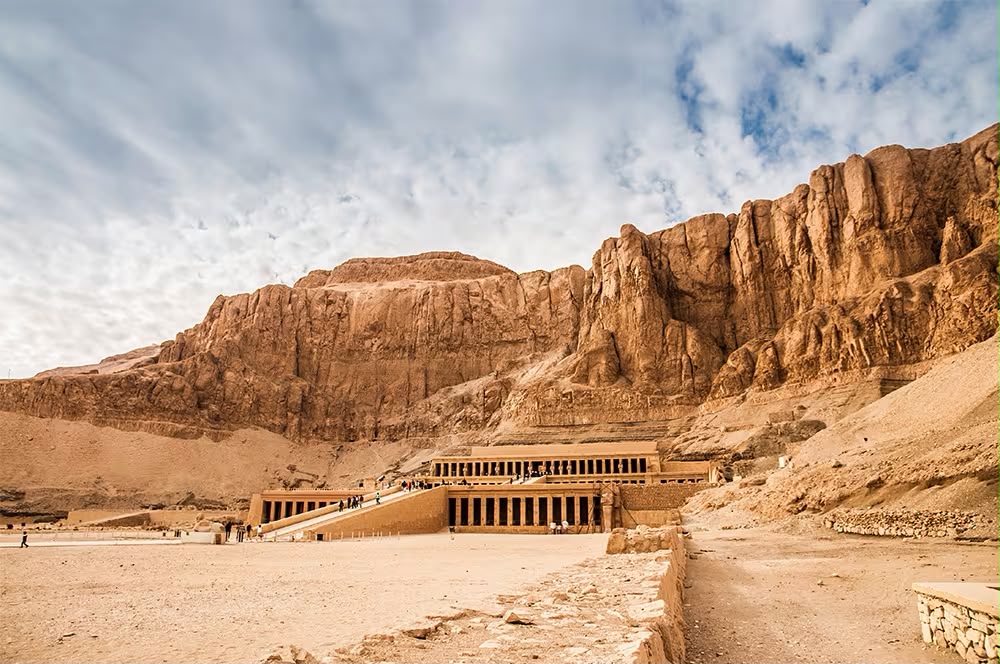
At Deir el-Bahari on Luxor’s West Bank, Hatshepsut’s mortuary temple takes a strikingly different architectural approach. Three ascending levels, colonnades, and the cliffside setting distinguish it from the enclosed halls found elsewhere.
Its most rewarding details explain how Hatshepsut presented her authority. Reliefs describe her expedition to Punt, recording its inhabitants, dwellings, animals, and valuable goods. Other scenes support her legitimacy as king, including her claimed relationship with the god Amun.
This makes the temple particularly interesting if you enjoy political history. Instead of viewing the decoration as background, ask your guide to explain how selected scenes construct a royal narrative.
Hatshepsut adds another dimension to an itinerary of temples in egypt: it is not simply a place to admire architecture, but a place to examine how a ruler wanted to be remembered.
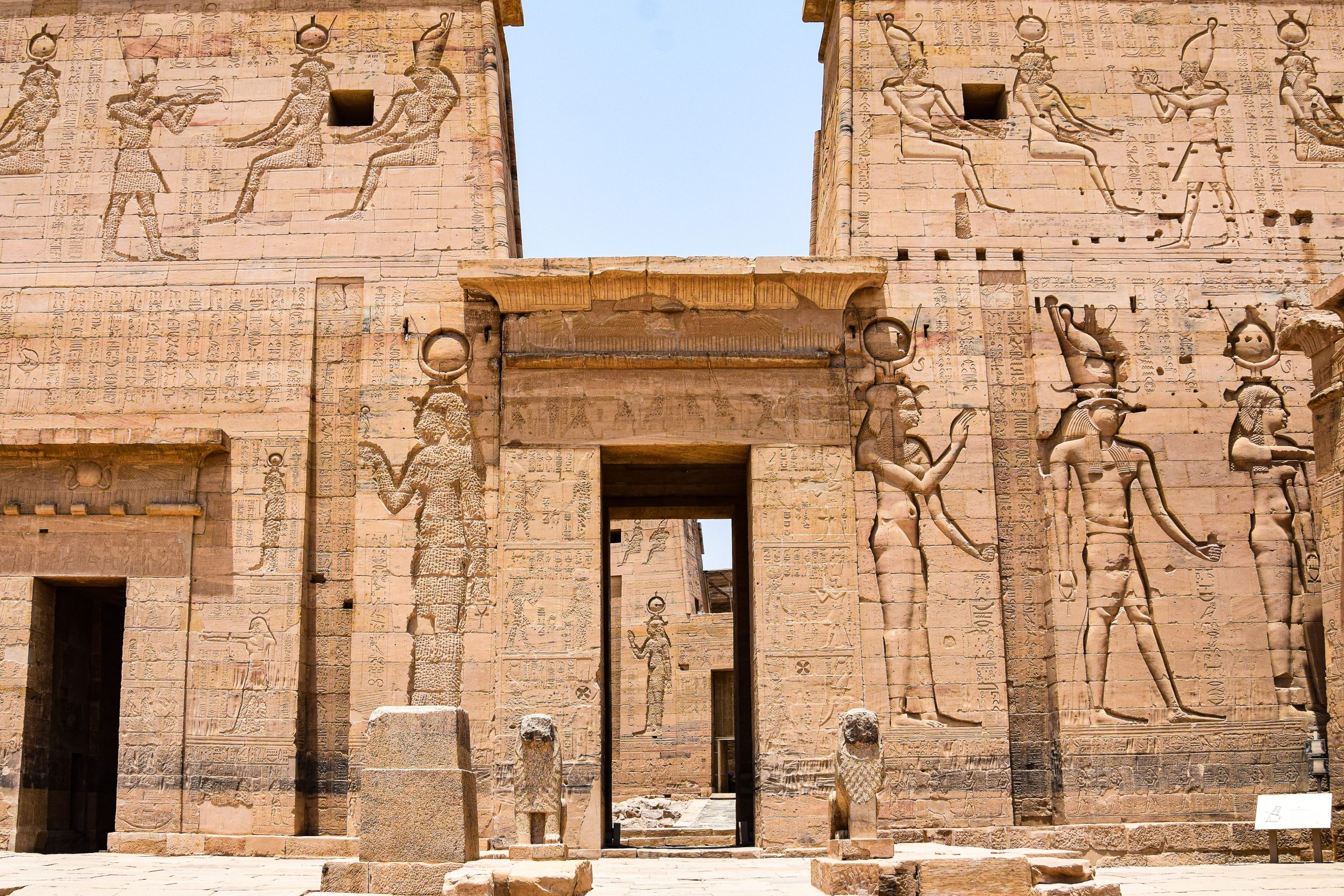
4. Philae temple : Follow the Story of Isis Across an Island Sanctuary
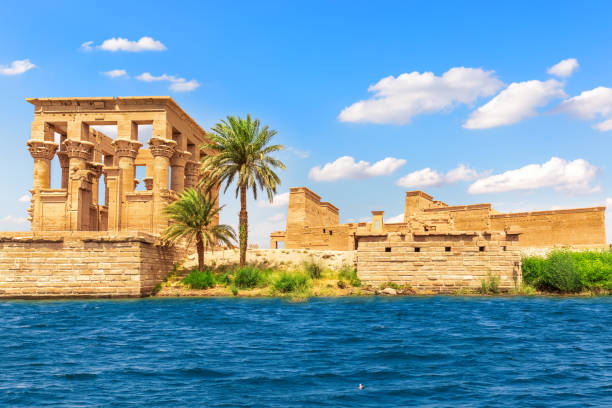
The appeal of philae temple begins with its setting, but its history deserves equal attention. The complex’s most prominent monument is the Temple of Isis, begun under Ptolemy II. Other surviving structures include a temple associated with Hathor and the distinctive Kiosk of Trajan.
Philae also helps challenge the idea that ancient Egyptian religious life ended neatly with the pharaohs. The Isis sanctuary continued functioning into the reign of the Byzantine emperor Justinian I, placing it among the last active ancient Egyptian temples.
The monuments now stand on Agilkia Island, having been relocated from their original island during the international campaign to protect Nubian heritage from rising waters. That rescue gives the visit a second story: the modern effort required to preserve an ancient sacred landscape.
When booking, ask whether boat transport, entrance tickets, and guiding are included in the quoted price.
5. Abu Simbel: Discover the Grandeur of Ramesses II’s Temples
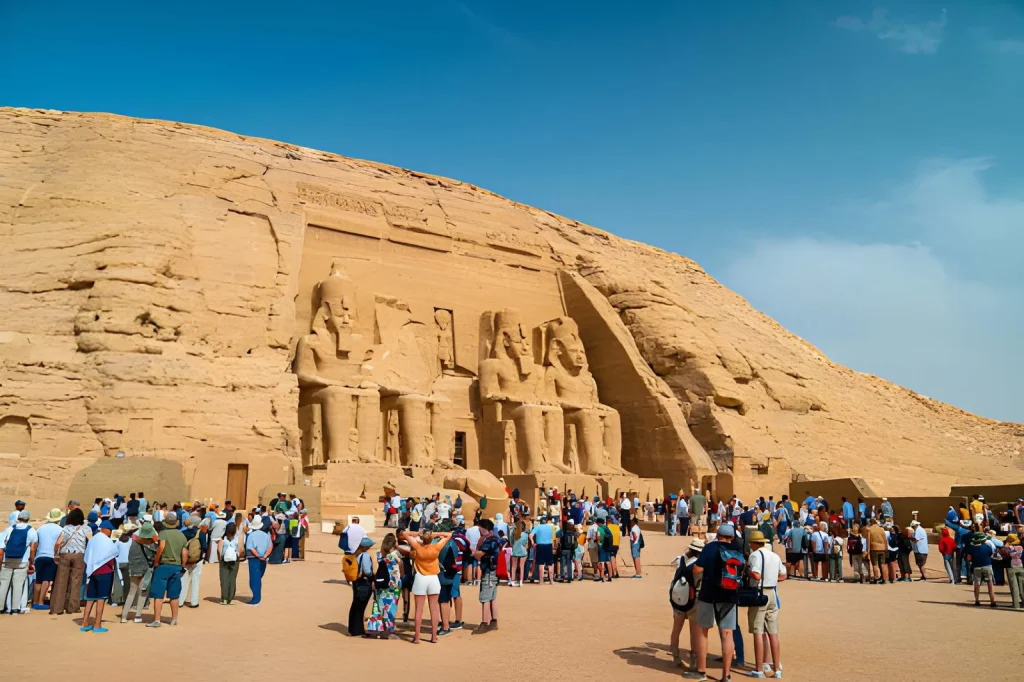
Abu Simbel makes its first impression through the four seated figures dominating the Great Temple’s façade. Ramesses II commissioned the rock-cut monument, while the nearby Small Temple honors Hathor and Queen Nefertari. On its façade, Nefertari’s statues match the king’s in height—an unusual feature worth noticing.
Inside, the focus shifts from scale to royal and divine imagery. The Great Temple leads toward a sanctuary containing seated figures of deities and a deified Ramesses II. Both temples were relocated through a UNESCO-led international effort to protect them from the waters associated with the Aswan High Dam.
Before choosing an abu simbel tour, compare the departure arrangements, transport, time at the site, and guiding format. Make sure the schedule allows you to visit both monuments rather than focusing only on the better-known façade.
For travelers selecting temples in egypt for their visual impact, Abu Simbel merits serious consideration—but its location means it should be planned deliberately, not added casually to an already crowded day.
6. Edfu Temple: Explore the Remarkable Temple of Horus
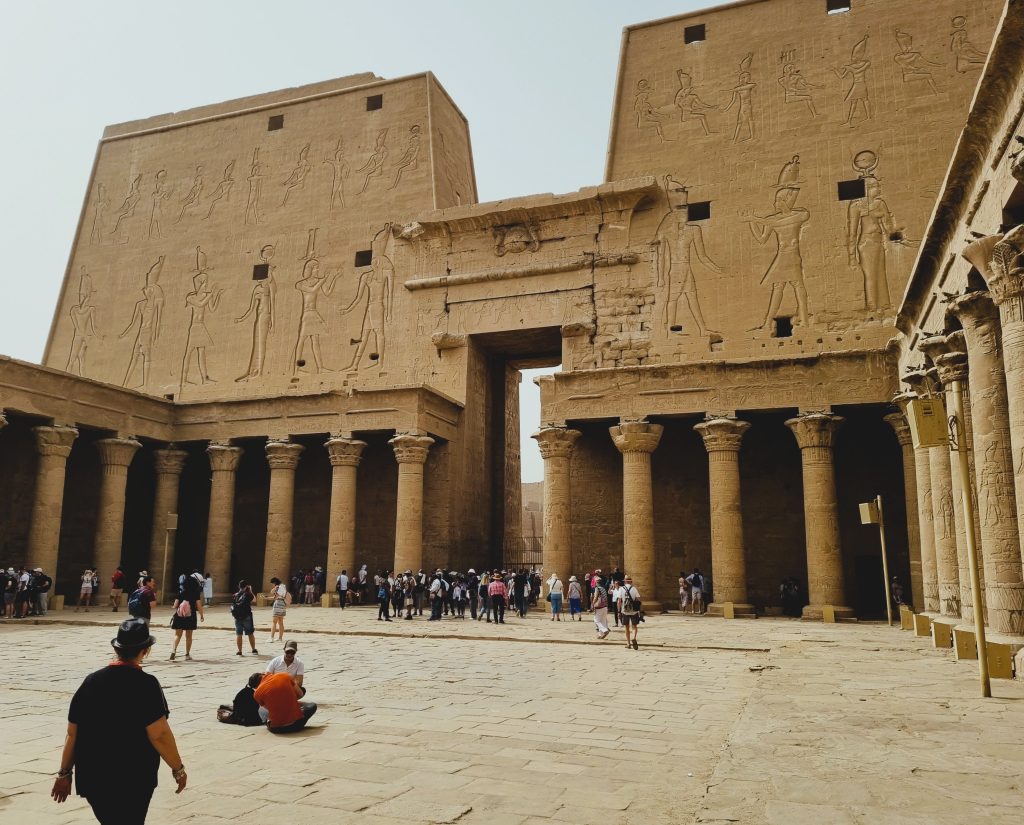
If your search for edfu temple egypt began with photographs of its entrance, the interior layout is the reason to keep it on your shortlist. Dedicated to Horus, Edfu is one of the most complete surviving ancient Egyptian temples. Construction began in 237 BC and was completed in 57 BC.
That preservation makes the sequence of spaces unusually easy to appreciate. Beyond the monumental entrance are a colonnaded court, columned halls, and increasingly inward rooms leading toward the sanctuary. Reliefs depict foundation rituals, worship, and the sacred journey of Horus accompanied by Hathor.
Rather than concentrating only on individual carvings, follow how the building changes as you move inward. The transition between spaces is part of the experience.
Edfu is especially useful when comparing temples in egypt because it helps you understand a temple as an organized ceremonial building, not just a collection of surviving walls.
7. Kom Ombo Temple: Discover a Sanctuary Dedicated to Two Gods
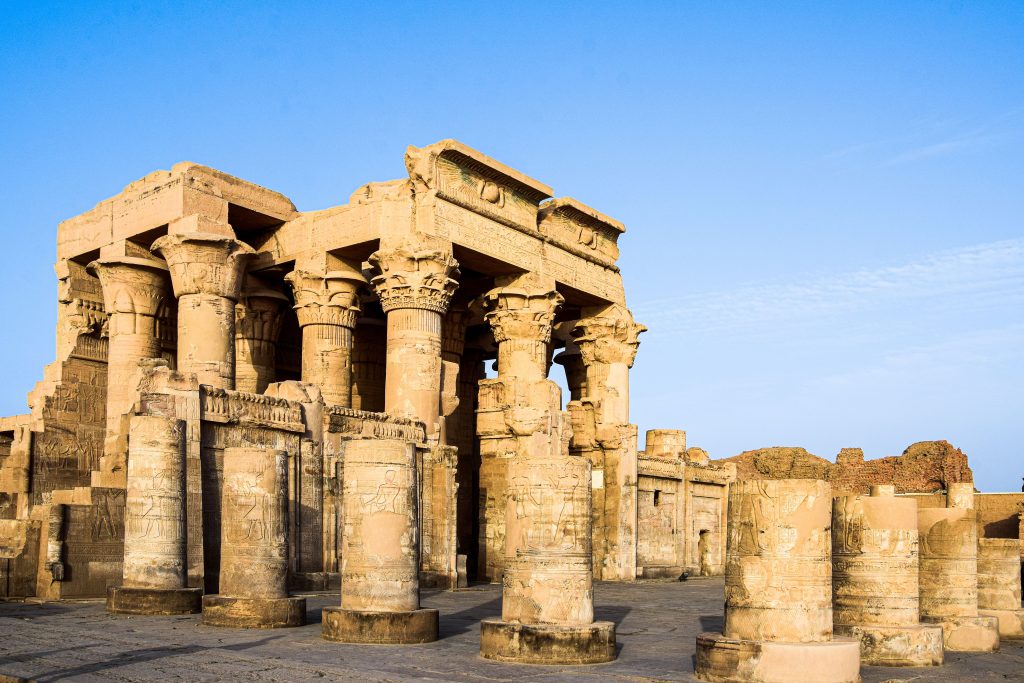
The defining feature of kom ombo temple is its dedication to two gods: the crocodile god Sobek and the falcon god Haroeris, or Horus the Elder. Its architecture reflects this partnership through parallel routes that lead to separate sanctuaries.
That arrangement gives you a clear theme to follow during the visit. Look for how the two divine identities are represented and how the building accommodates both. The walls also preserve calendars of festivals and rituals, alongside the well-known relief interpreted as depicting surgical instruments.
The nearby Crocodile Museum adds context by displaying mummified crocodiles and explaining their connection with Sobek. It is a relevant extension rather than an unrelated stop.
Kom Ombo brings variety to a route through temples in egypt because its central question is different: how could one sacred building serve two divine households?
8. Dendera Temple: Discover the Beauty of Its Colorful Ceilings
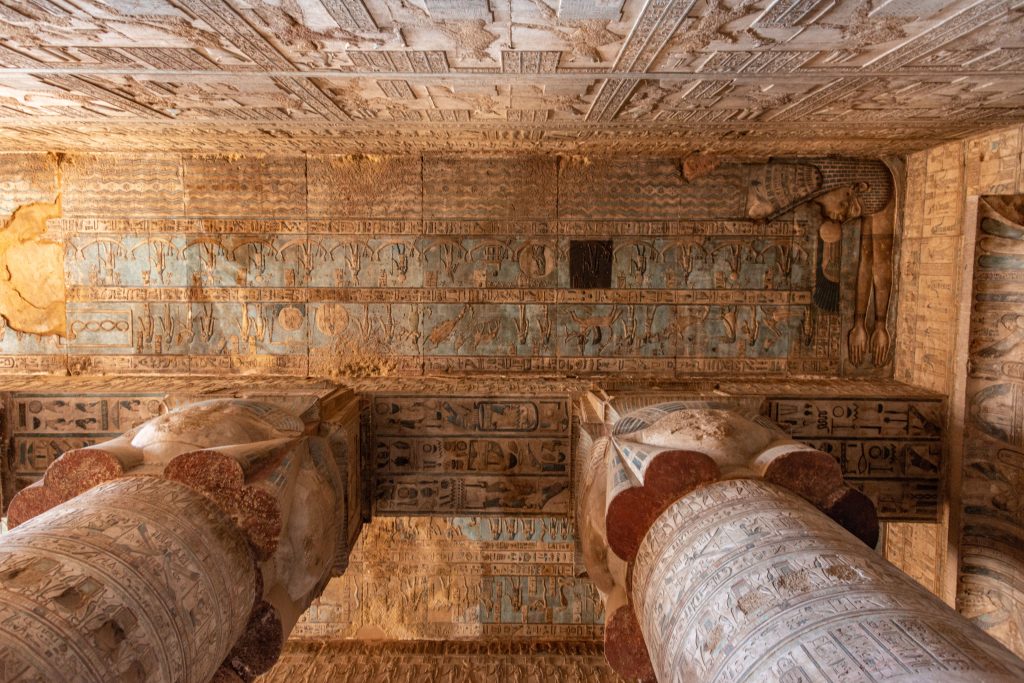
A dendera temple, looking upward is essential. The Temple of Hathor is particularly noted for astronomical decoration on its ceilings, while its entrance columns carry the goddess’s distinctive face. The surviving temple dates to the Ptolemaic period, although the site has evidence of much earlier religious structures.
Restoration has helped reveal original colors and clarify scenes previously obscured by soot. As a result, the visit offers an opportunity to consider painted surfaces as a central part of temple design, rather than imagining these monuments only as bare stone.
Dendera suits travelers who enjoy close observation. Ask your guide to select a few ceiling scenes and explain them clearly instead of attempting to identify every figure in a single visit.
It earns its place among the famous temples in egypt through a different kind of impact: detailed decoration that rewards patience.
How to Combine temples in egypt Without Repeating the Same Experience
When choosing the best temples to visit in Luxor and Aswan, prioritize contrast. For example, combine Karnak’s monumental scale with Hatshepsut’s royal storytelling, then add Philae’s island sanctuary. If preservation and architectural sequence interest you most, give Edfu particular consideration.
These choices draw on the distinct characteristics of each site rather than assuming that more stops automatically create a better trip.
Edfu and Kom Ombo can be incorporated into travel between Luxor and Aswan, while Dendera is an excursion beyond the main Luxor sights. Your route can therefore combine different experiences without requiring a separate return journey for every visit.
Use these planning principles:
- Give each day a clear focus instead of filling every available hour.
- Ask for a written itinerary showing the actual sightseeing stops.
- Separate travel time from visiting time when reviewing a quotation.
- Leave room for breaks and changes in pace.
- Confirm arrangements before paying, especially for private excursions.
What to Check Before Booking a Guided Temple Trip
Comparing the best private temple tours in Egypt starts with checking what the price covers, not simply which company lists the most monuments.
Request clear answers on:
- The temples included and the approximate time at each.
- Whether transport and guiding are genuinely private.
- Entrance fees, boat arrangements, meals, and optional extras.
- Pickup location and the final drop-off point.
- Cancellation terms and arrangements if the itinerary changes.
- Any walking, steps, or boarding requirements relevant to your group.
When reviewing ancient egypt tour packages, look for a balanced itinerary that explains the purpose of each stop.
Frequently Asked Questions
Can I choose just one temple in egypt for a short trip? Yes. Choose according to where you are staying and what interests you. Karnak is a strong option in Luxor for monumental architecture, while Philae offers an island-based experience near Aswan. Avoid choosing a distant site without considering the travel involved.
Are all temples in ancient egypt from the same historical period? No. The surviving sites span different periods, and some were expanded repeatedly. Edfu, for example, was built during the Ptolemaic period, while Karnak developed over a much longer sequence of royal building projects.
How can I check whether a temple visit suits someone with limited mobility? Request site-specific details before booking: walking distances, surface conditions, steps, seating, and any boat boarding.
What should I check before booking a photography-focused visit? Ask about current rules for your intended equipment, including tripods, professional cameras, and commercial shoots. Also confirm whether your schedule allows time for photography without reducing the guided visit to a rushed walk-through.
How can I avoid hidden costs when booking online? Request a total price and an itemized list of inclusions. Check entrance tickets, transfers, boat charges where relevant, meals, optional activities, and cancellation conditions. Keep the written confirmation so you can compare offers on the same basis.
Conclusion
The most rewarding way to explore temples in egypt is to choose each site for what it adds to your journey. Visit Karnak for its scale, Hatshepsut for its royal stories, Edfu for its well-preserved architecture, and Dendera for its colorful details. Philae and Abu Simbel offer distinctive settings and remarkable rescue stories, while Luxor Temple and Kom Ombo bring even more variety to your itinerary.
Ready to plan your trip? Contact us to explore our tour packages, get pricing details, and choose the itinerary that suits your interests and schedule.
